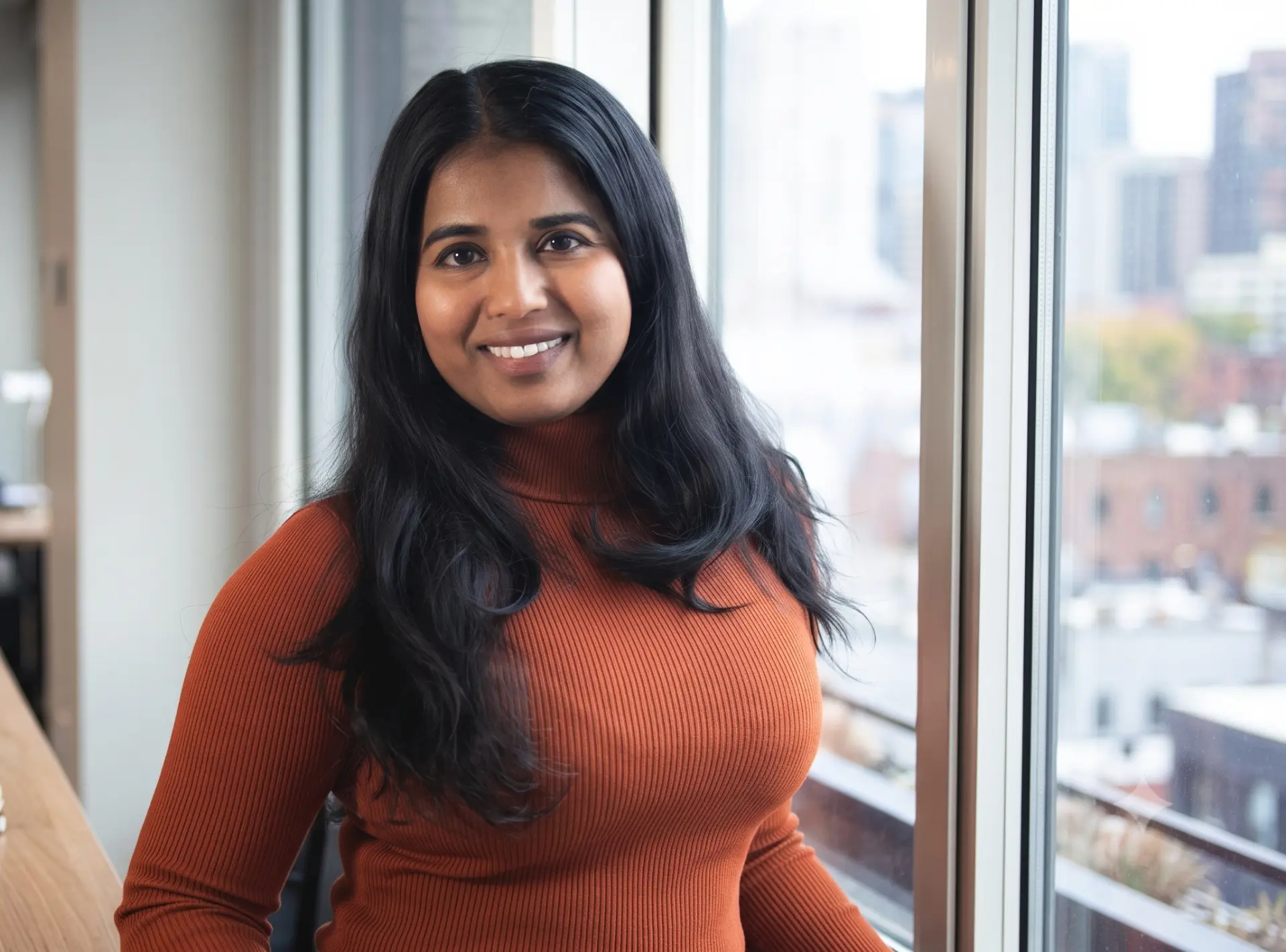
When you ask Pallavi Pal how she introduces herself, she doesn't reach for a title. She reaches for a story – one that begins not in a boardroom, but in the recurring motion of moving. Every three to four years, childhood meant packing bags and learning to read a new room. India to the United States. New York to Iowa. Each shift demanded a recalibration: who are these people, what do they care about, and where do I fit?
That early rhythm of adaptation became the quiet architecture of a career that would eventually span finance, technology, product leadership, and two continents. Today, Pallavi is Head of Product at Grata, a private market dealmaking platform that has grown more than 50x in annual recurring revenue under her team's leadership. She has spent close to fifteen years building B2B SaaS products that don't just function – they transform how institutions see the world. And now, at the peak of her career, she is choosing Portugal not as a retreat, but as a launchpad for something even bigger.
The Education That Was Never Meant to Fit a Single Box
Economics, English, and Psychology. On paper, it looks like a student who couldn't decide. In practice, it was the opposite – a deliberate layering of lenses that would become Pallavi's signature as a product executive.
She views these disciplines as "discrete puzzle pieces that fit together to create a holistic skill set." Economics taught her how to monetize, scale, and read market dynamics. Psychology gave her insight into human behavior – how users interact with products, what drives adoption, and what outcomes matter. And English? That was the thread that tied it all together: storytelling.
"Storytelling takes a product vision and makes it come to life for internal teams, customers, and investors," she explains. "But that storytelling needs to be grounded in reality – how people behave, how they interact, and ultimately how that plays a role in the product."
For Pallavi, a product roadmap is not a spreadsheet. It is a narrative arc. Context. Pain. Resolution. She draws the analogy to a movie: "You've got your context, you've got the pain or the problem, and at the end, you've got a resolution." This is how she leads teams through complexity – not with data alone, but with a story that makes the data mean something.
Falling into Product Management – and Finding a Purpose
Fifteen years ago, product management was not a career path you planned for. It barely existed as a formal role outside of a handful of pioneering tech companies. Pallavi, like many of her peers, "fell into it." But the fall had a direction. She was in her final year of college, interning at Moody's – the global rating agency that evaluates the creditworthiness of nations and corporations. Her background in economics drew her there. What she found, however, went beyond academic interest: an opportunity to build software that could serve as an early warning system.
Moody's had brought her in to help develop a monitoring product for the exact types of assets that had triggered the 2008 financial crisis. Had this product existed before the crash, it could have given analysts the signal that something was wrong. That tangible sense of impact – "taking an idea and turning it into something people could use, with a very visceral impact on the company and the world" – is what locked her into product management for good.
"You don't just build features," Pallavi says. "You build foresight."
Learning from Two Worlds
Pallavi's career has been a study in contrasts. She has worked at large, established corporations like Moody's and IHS Markit – institutions where stability and security are the currency. She has also led product teams at high-growth startups like OakNorth and Grata – where rapid change and evolution are the only constants.
What she learned from each informs how she leads today. "Large corporations require stability, certainty," she reflects. "Keeping that ship on balance is the driving force. Small companies are focused on rapid change – they don't have as much weight or baggage to bring along."
Her own compass, she admits, leans toward the storm: "Captain of the boat in the middle of the storm" is how she describes herself with a laugh. The excitement of evolution and the thrill of building in chaos – that is where she thrives. But she has also absorbed the pragmatism of the corporate world, the discipline of being "careful and judicious."
It is this duality – the ability to adapt to the needs of the company, rather than forcing a single template onto every environment – that has made her an effective executive across sectors.
The Portugal Spark: Love at First Sight
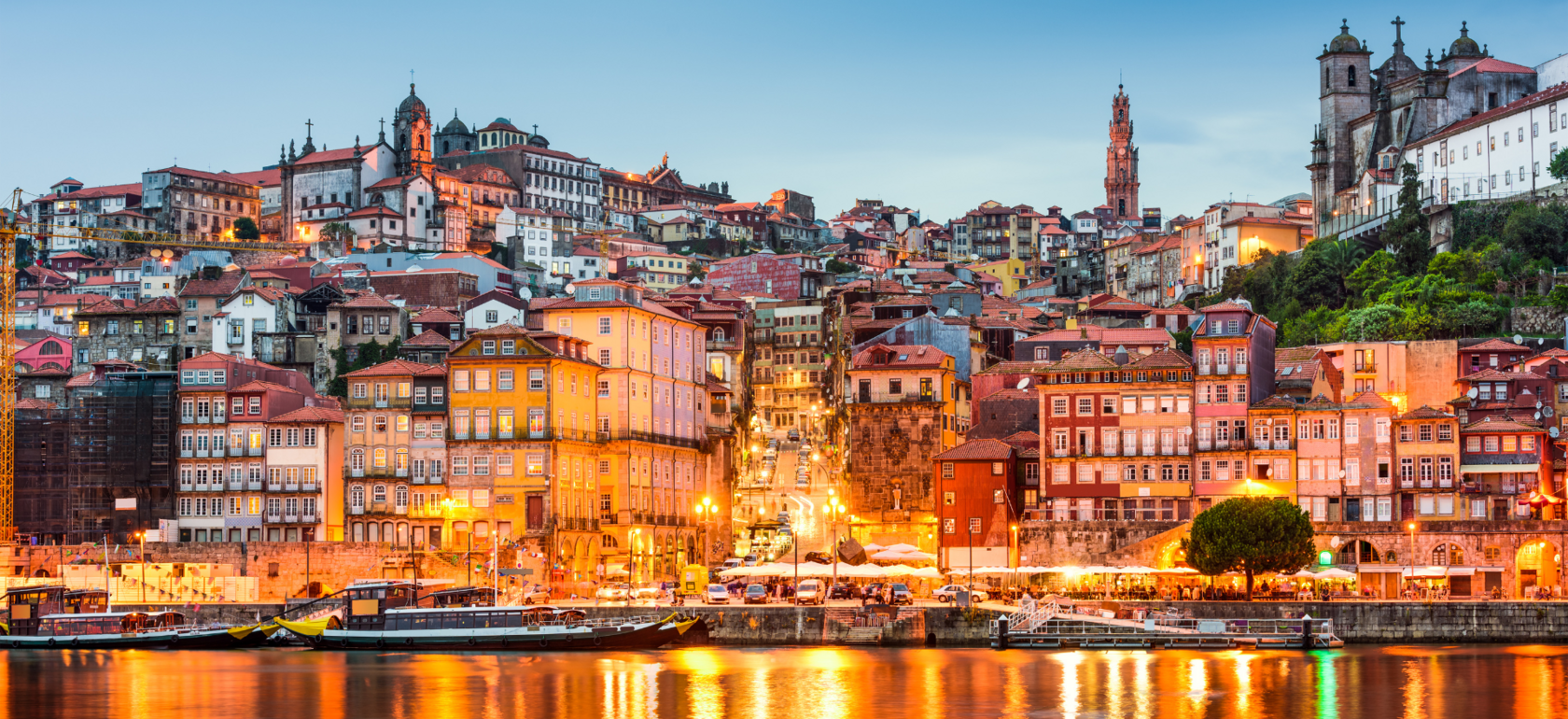
In 2018, Pallavi visited Portugal with friends. Lisbon. Sintra. Porto. It was a holiday – nothing more. But something about the country stayed with her.
She describes it as a slow buildup over time, the first spark of which was that summer trip. "I was enamored by the people, the culture, the history that we saw come to life in the architecture and landscape," she says. "The repeated experiences with Portuguese people – seeing how open, welcoming, and intrigued they were about the possibilities of evolving – that spoke to me as a person."
It wasn't just the past that drew her in. It was the future. Pallavi points to the contrast between the historic streets of Chiado and Rossio and the sleek, modern landscape of Oriente – with its new buildings and transportation hubs. "There is a different story you take away from the historic parts and the more modern parts," she reflects. "It tells me there's a kind of duality to Portugal and its people – deeply rooted in history, but also looking forward to the future."
Why Portugal? Not Retirement, but a New Base for Innovation
Many people see Portugal as a place to slow down. Pallavi sees it as a place to build. "I think it's how much the country and the culture is investing in tech and innovation," she says when asked what drew her to the World Talents and the Global Talent Portugal program.
She points to the density of startups opening their doors, the influx of remote tech talent choosing Portugal as a base, and the growing ecosystem that begins to resemble the talent clusters of Silicon Valley. "When you have a high density of tech talent in a smaller location, you see people building off each other's ideas, creating creative pathways that wouldn't have emerged otherwise."
And then there is the mindset of the people themselves. "My interaction with the Portuguese people shows there's a lot of interest to explore, to evolve, and to really build out opportunities and innovation in technology." For Pallavi, Portugal is not an escape from her career. It is an extension of it – a place where she can contribute, not just reside.
From New York's Go-Go-Go to Portugal's Balanced Rhythm
New York, she admits, is a city that "never sleeps." The mentality is "you'll sleep when you're dead." But after fifteen years of product leadership, Pallavi has come to believe in something else: balance.
"Balance is important to prevent burnout. Balance is important to spawn hobbies and interests outside of work. Those hobbies lead down interesting creative paths that circle back and contribute to how you think at work."
She sees Portugal's different rhythm as a chance to rebalance and rethink – not to work less, but to work better. "As an individual builds their creative passions and personal life, that feeds into building a stronger mindset and lens to the work you're doing professionally. That's actually a net positive."
It is the same insight she applies to product development: the best outcomes come not from relentless intensity, but from thoughtful design. And that includes designing a life.
The Next Chapter
After fifteen years of building her own career – climbing from entry-level product manager to senior executive – Pallavi is hungry for something new. Not a new title. Not a bigger salary. A new kind of impact.
"I have an insatiable curiosity, which spawns my interest to delve into different areas of development," she says. "I've spent time building my own career. What I want to do next is pay it forward – give back, impart my knowledge to startup founders, researchers, and those interested in building their own storied careers in tech."
She frames this as a multiplier effect – "One person can only do so much. But mentoring three, four, five people – helping them foundationalize their ideas, take their products to the next level – that creates ripples."
"I want to help that next generation of talent and really, truly be an advisor, a mentor, and help on that growth journey." It is why the World Talents program resonated so deeply with her. "It's not just about the practicalities of a move. It's how it ties to tech, innovation, startup growth – and personal growth. That's important to me."
A New Beginning
When asked what she would tell young specialists or entrepreneurs considering a move to Portugal, Pallavi offers a piece of advice that sounds simple, but carries the weight of fifteen years of reinvention: "Have an open mind and embrace the unexpected."
"Anytime you're taking a big leap – like moving to a different country – the rules of what you're expecting are almost always going to be different than the country you're moving to," she says. "Understand culturally what the expectations are, how to interact. Use that spontaneity to craft a journey you didn't even plan."
It is the same lesson she learned as a child moving every three years. The same lesson she applies every time she steps into a new industry, a new company, a new role.
For Pallavi Pal, Portugal is not the final destination. It is a new beginning – a new kind of soil where she can plant both her professional expertise and her desire to give back. She is not leaving her career behind. She is bringing it with her, richer and more intentional than before.
Her story is one of adaptability – not just to new places, but to new possibilities. It is a reminder that the most successful leaders are not those who stay on one path, but those who know how to build bridges between them. And now, she is building one between New York and Lisbon, between finance and technology, between the career she has built and the impact she still wants to make.